
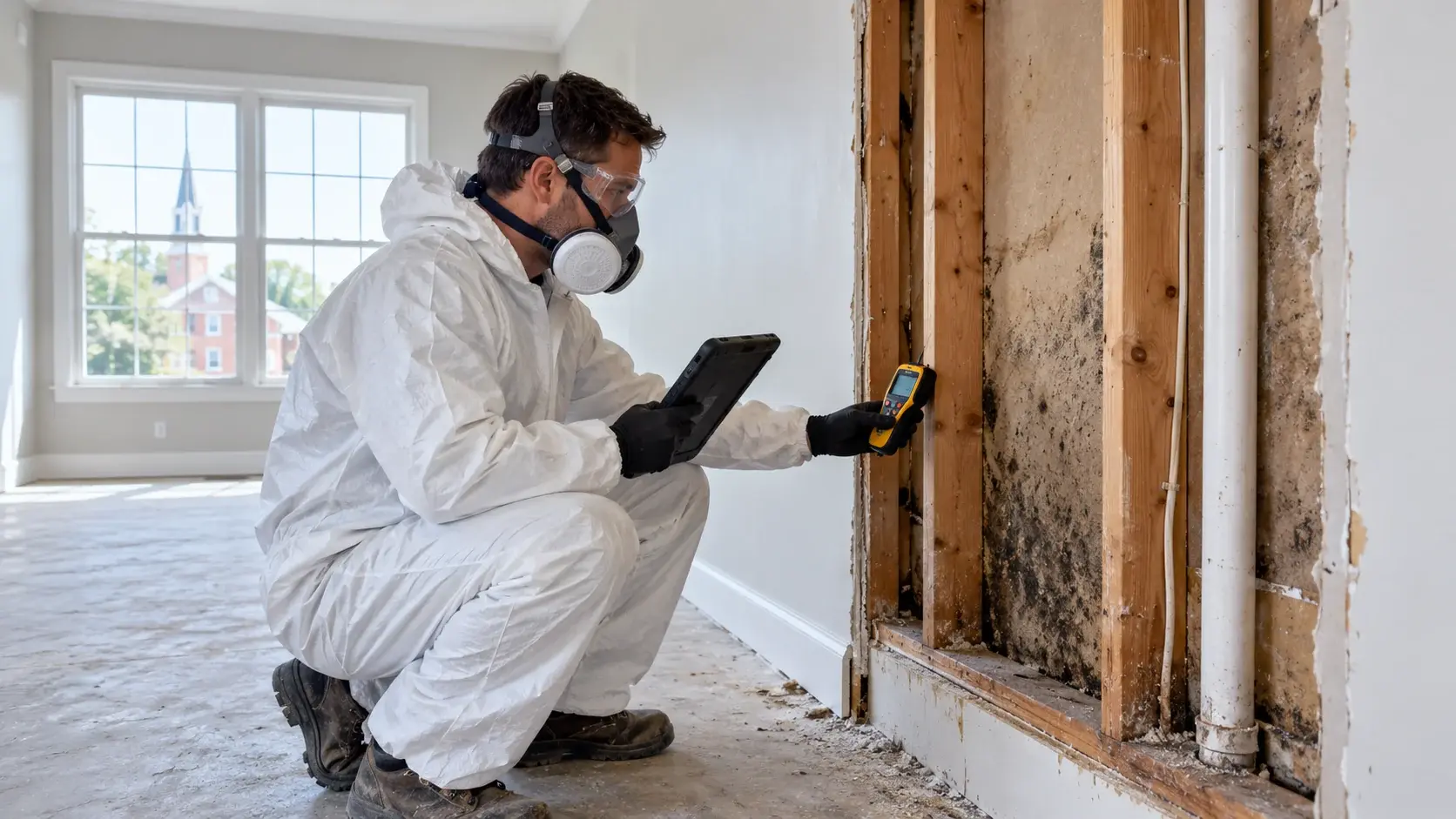
Mold Remediation in Paris, KY for Rental Properties: Inspection, Documentation, and Cleanup

Updated: 6 days ago
When mold is suspected in a rental home, apartment, or managed property, the goal is not simply to make a stain disappear. A sound response identifies the moisture source, documents the affected area, limits unnecessary disturbance, removes materials that cannot be cleaned, and verifies that the space is dry before repairs are closed. That structure protects the property and gives owners, tenants, managers, and insurers a clearer record of what happened.
Phoenix Remediation & Restoration provides mold remediation services and mold inspections for properties in Paris and Bourbon County, Kentucky. This guide explains how professional mold remediation in Paris, KY is typically organized for rental and managed properties without making assumptions about a specific lease, insurance policy, or health condition.

Why rental-property mold needs a documented response
Rental and managed properties involve several people who may need the same facts: the occupant who first notices a problem, the owner or property manager authorizing work, maintenance personnel correcting the leak, and an insurance representative evaluating a claim. A written timeline, labeled photographs, moisture readings, and a defined work scope help keep those conversations focused on observable conditions.
The U.S. Environmental Protection Agency emphasizes that mold remediation should address the moisture problem as well as the visible contamination. Cleaning or painting over a surface without correcting the leak, condensation, drainage issue, or humidity source can leave the underlying condition unresolved.
Common moisture paths to investigate
The source can be obvious, such as a supply-line break, or hidden behind finishes. An inspection may evaluate the affected room and adjoining spaces rather than stopping at the first visible mark. Common paths include:
Plumbing leaks beneath sinks, around toilets, inside wall cavities, or from appliance connections.
Roof or flashing leaks that wet attic insulation, ceilings, or wall assemblies.
HVAC condensate leaks, restricted drains, or persistent condensation around cold surfaces.
Basement or crawlspace moisture that raises humidity or reaches framing and subflooring.
Water intrusion around windows, doors, exterior penetrations, or poorly managed drainage.
Materials that remained wet after an earlier water loss.
For more detail about moisture below the living space, see Phoenix’s guide to crawlspace remediation in Paris, KY. If the mold concern followed a sudden leak or water emergency, the company’s Paris water-removal and insurance-documentation guide explains the first records to preserve.
What to do when mold is first reported
A fast response should still be orderly. If it can be done safely, stop the active water source and protect unaffected belongings from additional moisture. Avoid cutting into walls, pulling contaminated materials through clean rooms, dry-brushing growth, or using a household fan that could move dust and spores beyond the affected area.
Record the date, room, and person who first reported the condition.
Take clear overview and close-up photographs before moving materials.
Note recent leaks, odors, staining, condensation, or changes in indoor humidity.
Restrict unnecessary access when materials may be disturbed.
Follow the lease, management procedure, and insurance policy for required notifications.
Arrange a professional evaluation when the source, extent, or safe cleanup method is uncertain.
Inspection and testing: when each is useful
A professional assessment commonly begins with a visual inspection, a moisture investigation, and questions about the water history. The inspector may check adjacent materials because drywall, insulation, cabinets, subfloors, and framing can conceal moisture beyond the visible edge.
Sampling can be useful when it will answer a specific question or support a defined decision, but it is not automatically required for every visible mold condition. The EPA notes that sampling is often unnecessary when visible mold is present and the cleanup approach is clear. When sampling is appropriate, the reason for the test and the way results will affect the plan should be explained in advance.
How professional mold remediation is organized
The exact scope depends on the materials, moisture source, affected area, and how the building is occupied. A professional plan may include the following sequence:
Document conditions and define the work area before demolition or cleaning begins.
Correct or coordinate correction of the moisture source so the problem is not immediately repeated.
Use appropriate containment, personal protective equipment, and controlled work practices for the scope.
Remove porous materials that cannot be reliably cleaned and dry them out of the building without contaminating unaffected rooms.
HEPA-vacuum and detail-clean salvageable surfaces using methods appropriate for the material.
Dry the assembly and monitor moisture before reconstruction.
Complete a final visual review and retain job records for the owner or manager.
The EPA’s mold remediation checklist also stresses fixing the moisture problem, drying wet materials, using suitable containment and protective equipment, and checking that the cleanup is complete before the area is returned to normal use.
A practical documentation file for owners and property managers
Good records do not guarantee insurance coverage or resolve responsibility under a lease, but they can reduce confusion. Keep one file for the incident containing:
The initial report, dates, contact notes, and a simple event timeline.
Before, during, and after photographs labeled by room.
Moisture readings and inspection notes when provided.
Invoices or work orders for the plumbing, roofing, HVAC, drainage, or other source repair.
The remediation scope, equipment or drying records, and disposal documentation.
The final visual review, recommendations, and any remaining repairs.
If an insurance claim may be involved, notify the carrier promptly and ask what documentation and emergency-action procedures the policy requires. Coverage varies by policy, cause of loss, exclusions, and timing. Phoenix can document observed conditions and completed work, but the carrier determines coverage.
Reducing the chance of recurrence
After cleanup, prevention is a maintenance process. Repair leaks promptly, keep gutters and exterior drainage functioning, maintain HVAC condensate lines, manage basement and crawlspace moisture, and avoid closing damp wall or floor assemblies. Property managers can also make reporting easier by giving occupants one clear method for sending photographs and describing leaks before a small problem expands.
The EPA’s guide to mold and moisture in the home provides additional moisture-control and cleanup guidance.
Mold remediation for Paris and Bourbon County properties
Phoenix Remediation & Restoration serves homeowners, landlords, and property managers in Paris and the surrounding Bourbon County area. If you need an inspection, moisture-source evaluation, or a defined remediation scope, call 859-585-3750 or use the scheduling link below. You can also view the company’s Google Business Profile for current business information.
Frequently asked questions
Should a tenant or property manager clean visible mold with bleach?
A surface stain does not show how far moisture or contamination extends. Scrubbing or spraying without identifying the water source can disturb material and miss growth inside porous assemblies. When the source or extent is uncertain, document the condition and arrange an assessment before disturbing it.
Is mold testing always required before remediation?
No. EPA guidance says sampling is often unnecessary when visible mold is present and the cleanup approach is clear. Testing can be useful when it answers a specific question, supports a defined decision, or is required by a project stakeholder.
Can a rental-property mold loss be covered by insurance?
Coverage depends on the policy, the cause and timing of the loss, exclusions, and the carrier’s investigation. Preserve photographs, timelines, source-repair invoices, moisture records, and the remediation scope, then ask the carrier what is required. Do not assume coverage.
Can the wall be closed as soon as visible mold is removed?
The moisture source should be corrected, affected materials addressed, and the assembly dried before reconstruction. Closing damp materials can conceal an unresolved condition.
Does Phoenix serve properties outside Paris?
Yes. Phoenix serves Paris and other communities across its Kentucky service area. Call 859-585-3750 to confirm service for a specific address and discuss the property’s conditions.
This article provides general restoration information and is not medical, legal, engineering, or insurance advice. Conditions should be evaluated for the specific property.
For additional guidance about restoration services in paris, read our article: Certified Restoration in Paris, KY: Restoration documentation for rental property owners.
For related practical guidance, read Mold Inspection and Mold Remediation Services in Central and Eastern Kentucky.


Comments