
Mold Remediation in Georgetown, KY: HVAC Condensation and Hidden Moisture

Updated: 4 days ago
A ceiling stain near a supply vent, sweating ductwork, water beside an air handler, or a musty odor when the system runs can point to an HVAC-related moisture problem. Mold remediation in Georgetown, KY, should address both sides of the issue: the mechanical or insulation defect that created moisture and the building materials that became wet or contaminated.
Phoenix Remediation & Restoration serves Georgetown and Scott County with mold inspections, professional remediation, water-damage mitigation, moisture mapping, and restoration documentation. HVAC diagnosis and equipment repair should be completed by a qualified heating-and-cooling professional. Phoenix can evaluate and remediate affected walls, ceilings, insulation, flooring, framing, and nearby contents.
Understanding HVAC Moisture Issues
Air-conditioning systems remove moisture from indoor air. This water usually drains through a condensate pan and line. The EPA’s mold and moisture guidance for HVAC systems identifies poorly draining condensate pans, wet duct liners, uninsulated ducts, leaks, high humidity, and condensation as potential moisture sources. When that water reaches paper-faced drywall, insulation, wood, dust, carpet, or stored materials, those surfaces can support mold growth.
The visible stain may not show the full path. Condensate can travel under an air handler, along framing, through a ceiling cavity, behind baseboards, or beneath flooring before it becomes obvious. Condensation on an inadequately insulated duct can also drip somewhere other than the point where it first formed.
Warning Signs of Moisture Problems
Look for these warning signs around HVAC equipment and ductwork:
Standing water, rust, staining, or debris in or near a condensate pan
Water marks below an air handler or around a condensate line
Sweating supply ducts, boots, registers, or refrigerant lines
Bubbling paint, soft drywall, sagging ceiling material, or swollen trim
Wet or compressed insulation in an attic, closet, basement, or crawlspace
A musty odor that becomes noticeable when the HVAC system operates
Recurring ceiling spots even after repainting
Elevated indoor humidity or frequent condensation on cold surfaces
Do not remove equipment panels, touch electrical components, or disturb suspected contamination inside a system unless you are trained and authorized to do so. Shutoff and repair decisions belong to the appropriate HVAC or electrical professional.
Common Moisture Sources That Need Mechanical Correction
Several common issues can lead to moisture problems:
A clogged, disconnected, cracked, or improperly routed condensate drain
A drain pan that is damaged, dirty, overflowing, or not draining correctly
A frozen coil or equipment malfunction that releases water when ice melts
Uninsulated or poorly insulated ducts in an attic, crawlspace, garage, or other unconditioned area
Air leakage at duct joints, boots, or equipment connections
Wet internal duct liner or nearby insulation that cannot be effectively dried
Humidity that remains elevated because of system operation, ventilation, or building-envelope conditions
A remediation contractor should not guess at a mechanical repair. The affected area may need coordinated work: an HVAC technician corrects the condensate, insulation, airflow, or equipment problem, while the remediation team contains the work area, removes damaged materials, cleans salvageable surfaces, and verifies drying.
What a Mold and Moisture Inspection May Include
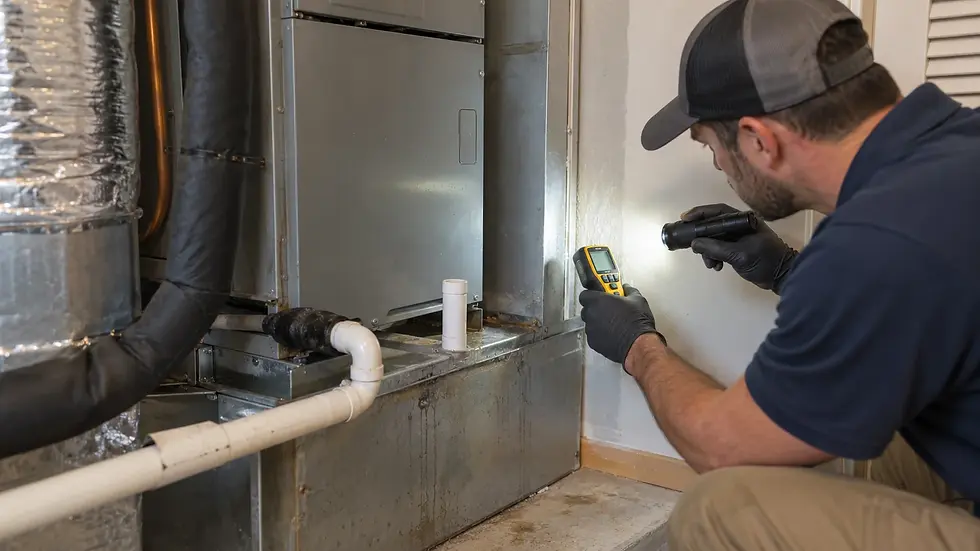
Phoenix’s mold-inspection service may include a visual assessment, moisture readings, humidity measurements, photographs, inspection of accessible materials near the equipment and ductwork, and a review of the water-loss history. The inspection helps distinguish a current wet condition from an old dry stain and identify which materials require additional evaluation.
The CDC/NIOSH mold guidance notes that thorough visual inspection and musty-odor detection are often more useful than routine short-term air sampling. Testing may still be appropriate when the source is uncertain, documentation is required, or another party specifies it, but sampling alone does not locate or correct the moisture problem.
What if Mold Is Suspected Inside the HVAC System?
Moisture inside ductwork or equipment deserves careful evaluation because the system can move air throughout the building. The EPA’s residential air-duct guidance emphasizes moisture control, properly draining condensate pans, sealed and insulated ducts in unconditioned spaces, and replacement of wet or moldy fiberglass duct material. It does not support assuming that every odor or nearby wall stain requires whole-house duct cleaning.
The scope should be based on where moisture and contamination are actually found. Accessible sheet-metal surfaces, porous internal liner, insulation, filters, coils, drain components, registers, and nearby building materials each require different decisions. A qualified HVAC contractor should evaluate internal equipment and system components.
A Professional Remediation Plan
A professional remediation plan should include the following steps:
Photograph the source area and map moisture in accessible walls, ceilings, flooring, insulation, and framing.
Coordinate HVAC or plumbing correction before relying on cosmetic repairs.
Protect occupied areas and establish containment and HEPA-filtered air control when disturbance could spread debris.
Remove wet or mold-affected porous materials that cannot be effectively cleaned and dried.
HEPA vacuum and clean salvageable framing and hard surfaces using methods appropriate for the material.
Use controlled drying and document moisture conditions before reconstruction closes the area.
Complete a final visual review and retain the job photographs, readings, equipment records, and invoices.
Learn more about Phoenix’s professional mold-remediation service and the earlier Georgetown guide explaining what the professional remediation process includes.
HVAC Water Damage and Insurance Documentation
If a condensate overflow or equipment failure caused sudden water damage, document the conditions before cleanup when it is safe. Useful records can include the date discovered, source photographs, room overviews, moisture readings, the HVAC technician’s findings, damaged-material lists, drying logs, estimates, invoices, and communications with the carrier.
Phoenix can document the restoration conditions and work performed, but only the insurance company can interpret the policy and decide coverage. For additional claim-preparation information, see Phoenix’s water and fire damage insurance-claim resource.
Reducing the Chance of the Moisture Returning
To reduce the chance of moisture returning, consider these steps:
Have condensate pans and drains inspected and maintained as recommended for the system.
Correct standing water, drainage restrictions, leaks, and equipment malfunctions promptly.
Keep ducts and refrigerant lines properly sealed and insulated where condensation can form.
Replace insulation or duct liner that remains wet or cannot be effectively restored.
Use a humidity meter and investigate repeated high readings instead of relying only on comfort.
Recheck repaired areas after the system has operated under normal cooling conditions.
Do not reinstall drywall, insulation, flooring, or trim until the affected structure is dry.
Frequently Asked Questions
Can a clogged condensate line cause mold?
It can create water damage if the pan or drain overflows. Mold risk depends on which materials became wet, how long they stayed wet, and whether the moisture source and affected materials were properly addressed.
Does a musty smell from a vent prove there is mold in the duct?
No. Odors may come from several sources, and the system and surrounding materials should be inspected before a conclusion is made. Moisture, visible material condition, system access, and odor patterns help guide the next step.
Should the HVAC system be turned off during remediation?
That decision depends on the location and whether operation could spread contamination or worsen moisture. The remediation plan and qualified HVAC professional should coordinate safe system operation and shutdown.
Does all ductwork need to be replaced?
Not automatically. Replacement decisions depend on the material and condition. Wet or visibly moldy porous liner or fiberglass may not be effectively cleanable, while accessible hard-surface components require a different evaluation.
Will homeowners insurance cover mold from an HVAC leak?
Coverage depends on the policy, cause, exclusions, endorsements, maintenance history, timing, and carrier investigation. Phoenix can provide documentation but cannot promise coverage.
Schedule Mold Help in Georgetown, KY
If you see water near an air handler, notice sweating ducts, or smell a recurring musty odor, call or text 859-585-3750 for mold and moisture help in Georgetown and Scott County. You can also view Phoenix Remediation & Restoration on Google or schedule a meeting online.
For more local guidance about restoration in Georgetown, see Certified Restoration in Georgetown, KY: What credentials mean for condensation-related damage.


Comments