

Mold Remediation in Berea, KY After an Appliance Leak

Updated: 6 days ago
A dishwasher hose, refrigerator supply line, washing-machine connection, water heater, or appliance drain can leak slowly enough to stay hidden beneath cabinets and flooring. By the time a musty odor, swollen material, or visible growth appears, water may have spread beyond the appliance opening.
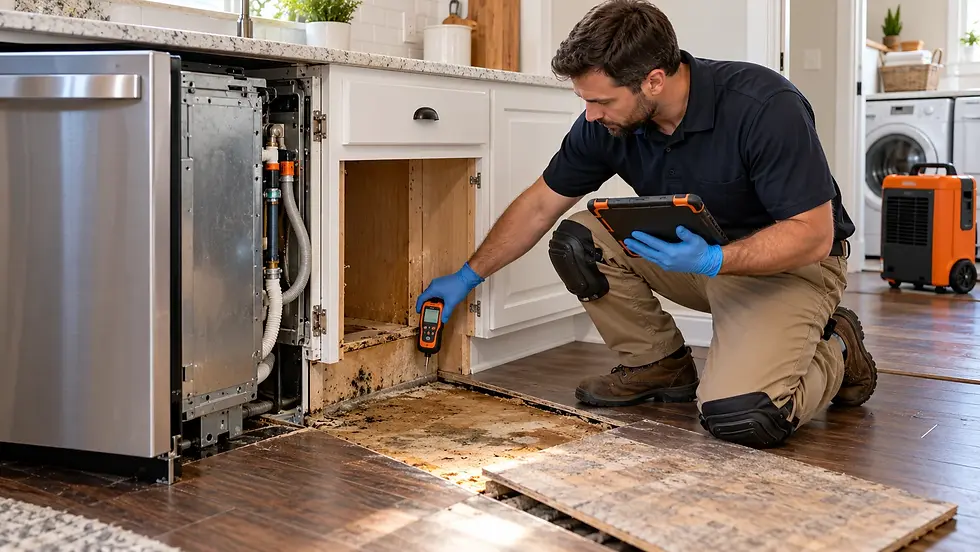
For homeowners and property managers looking for mold remediation in Berea, KY, an appliance leak should be evaluated as a moisture-path problem—not just a wet spot beside the machine. The response should identify the source, map the affected materials, remove or clean what cannot be restored, dry the remaining assembly, and document the work before repairs conceal it.
Why Appliance Leaks Can Create Hidden Mold Problems
Appliances connect to water supplies, drains, pans, pumps, and hoses that may fail behind finished surfaces. A small leak can travel beneath sheet vinyl, laminate, luxury vinyl plank, underlayment, cabinets, or wall plates without creating obvious standing water.
Low-permeability flooring can slow evaporation from above. Particleboard cabinet bases and thin wood underlayment can absorb water, swell, and hold moisture against the subfloor. The visible surface may feel dry while concealed layers remain damp.
Appliances and Connections Worth Checking
Dishwasher supply lines, drain hoses, pumps, door seals, and the floor beneath the appliance
Refrigerator and ice-maker supply tubing, valves, fittings, and wall penetrations
Washing-machine hoses, shutoff valves, drain connections, pumps, and overflow pans
Water-heater tanks, relief-valve discharge, drain valves, and nearby flooring or drywall
Dehumidifier, condensate-pump, and HVAC drain lines located near finished rooms
Utility sinks and appliance hookups concealed behind cabinets or access panels
Do not pull energized appliances into standing water or reach behind equipment when electrical or plumbing hazards may be present. Shut off the water source and power only when it can be done safely, then use qualified trades as appropriate.
Warning Signs the Water Traveled Farther Than It Appears
Swollen toe-kicks, cabinet sides, trim, or flooring edges
Loose flooring, bubbling sheet vinyl, lifted seams, or darkened grout
A musty odor that remains after the appliance area is wiped dry
Staining in the room below or dampness in the crawlspace
Soft drywall, peeling paint, or damaged baseboards near the appliance
Moisture readings that remain elevated outside the visible spill area
Visible mold-like spotting on concealed cabinet backs, underlayment, or subfloor
These observations do not identify a mold species or determine the entire scope. They are reasons to investigate the moisture path before installing new flooring or pushing the appliance back into place.
What to Do First After an Appliance Leak
Stop the water at the appliance valve or main shutoff if it is safe to do so.
Avoid operating the appliance until the source has been inspected and repaired.
Photograph the appliance location, connection, visible water, damaged finishes, and nearby rooms.
Move dry belongings away from spreading moisture without disturbing visible mold-like growth.
Do not use an ordinary household vacuum on water or suspected mold debris.
Arrange moisture mapping to determine whether water reached cabinets, flooring layers, walls, or the space below.
Notify the insurance carrier promptly if a claim may be involved, while taking reasonable action to prevent additional damage.
Phoenix provides water-damage mitigation, moisture mapping, controlled drying, and professional mold remediation for Berea and Madison County properties.
How Moisture Mapping Defines the Work Area
A professional inspection follows the water instead of assuming damage stops at the appliance. Readings may be taken at the cabinet base, flooring transitions, walls, adjoining rooms, and accessible framing below. Thermal imaging can help identify patterns, but findings should be confirmed with suitable moisture instruments.
The source, duration, and approximate time the leak was discovered
The construction of the floor, including finish material, underlayment, and subfloor
Moisture beneath fixed cabinets and at wall or doorway transitions
Conditions in a crawlspace, basement, or ceiling below the appliance
Whether insulation, drywall, cabinet components, or flooring can be exposed and dried
Visible growth, odors, and materials that are deteriorated or unsuitable for cleaning
The source repair and any limits on access
If the condition is uncertain, Phoenix's mold inspection services can help document visible conditions, likely moisture contributors, and whether sampling would answer a specific question. Testing is not automatically required for every visible mold condition.
What Appliance-Leak Mold Remediation May Include
The work plan depends on the affected area, material porosity, access, contamination conditions, and whether the source has been repaired. Professional remediation may include:
Establishing work-area isolation or containment based on the planned disturbance
Protecting adjacent rooms and controlling dust and debris movement
Removing damaged porous flooring, underlayment, drywall, insulation, or cabinet components that cannot be adequately cleaned or dried
Bagging or wrapping debris before carrying it through clean areas
HEPA vacuuming and detailed physical cleaning of salvageable structural materials
Using cleaning or antimicrobial products only as allowed by their labels and the surface involved
Drying remaining framing and subfloor materials with monitoring
Completing a visual and moisture review before reconstruction
The EPA's mold and moisture guidance emphasizes prompt drying, moisture-source correction, and removal of porous materials that cannot be cleaned. Applying a product or covering the area does not replace those steps.
Cabinets and Layered Flooring Need Special Attention
Cabinet toe-kicks, end panels, and sink or appliance bases may hide the edge of the water path. Some solid-wood or nonporous components may be cleanable, while swollen particleboard or damaged composite material often cannot be returned to its prior condition. The decision should be based on actual material condition and access—not appearance alone.
Layered flooring can also make drying difficult. Water may move between the finish floor, foam pad, sheet vinyl, thin underlayment, and structural subfloor. If the upper layer prevents effective evaporation or if the underlayment has swollen or deteriorated, controlled removal may be needed to expose the assembly.
Insurance Documentation After an Appliance Leak
Insurance coverage depends on the policy, cause, duration, maintenance history, exclusions, and reporting requirements. Sudden damage may be evaluated differently from long-term seepage or repeated leakage. Phoenix can document restoration conditions and work, but only the carrier can decide coverage.
Wide and close-up photos before moving the appliance or removing materials
The date and time the leak was discovered and when the source was stopped
A plumber or appliance technician's findings and source-repair invoice
Moisture readings, affected-area notes, and a floor plan when useful
Photos of hidden damage found beneath cabinets, flooring, or walls
Equipment placement, monitoring logs, demolition records, and disposal documentation
Written communications with the insurer, adjuster, property manager, and contractors
Do not delay emergency action needed to protect people or prevent additional damage. When practical, document damaged materials before disposal and ask the carrier whether it needs photographs, samples, or an inspection.
How to Reduce the Chance of Another Appliance Leak
Inspect accessible hoses, valves, fittings, pans, and drain connections regularly
Replace damaged or deteriorated supply lines using components appropriate for the appliance
Keep shutoff valves accessible and make sure household members know their location
Investigate small stains, warped trim, soft flooring, or recurring odors promptly
Use appliance pans, leak alarms, or automatic shutoff devices when appropriate
Check the crawlspace, basement, or ceiling below after an overflow or slow leak
Do not install new finishes until concealed materials have been evaluated and dried
Mold Remediation Help in Berea and Madison County
Phoenix Remediation & Restoration serves Berea, Richmond, and surrounding Madison County communities. For broader nearby guidance, read Water Damage and Mold Remediation in Richmond, KY and use our home mold inspection checklist to recognize moisture warning signs without disturbing building materials.
Call 859-585-3750 to discuss an appliance leak or suspected mold condition in Berea, or schedule an inspection below. You can also view Phoenix Remediation & Restoration on Google Business Profile for company information and directions.
Frequently Asked Questions
Can a small dishwasher leak cause mold beneath the floor?
Yes, if moisture remains trapped long enough. The visible amount of water does not always show how far it traveled beneath cabinets or flooring layers.
Does all wet flooring need to be removed?
No. The decision depends on the material, contamination, moisture level, access, damage, and whether the assembly can be dried reliably. Swollen or delaminated materials may not be restorable.
Should an appliance be moved before the restoration inspection?
Avoid moving heavy connected appliances when doing so could worsen a leak, damage flooring, or create electrical or plumbing hazards. A qualified technician can coordinate safe access.
Is mold testing required after an appliance leak?
Not automatically. Testing may be useful when the extent is unclear, documentation is required, a protocol calls for it, or an independent professional recommends it.
Will insurance cover mold after an appliance leak?
Coverage varies with the policy and cause of loss. Prompt reporting, source-repair records, moisture documentation, and photographs can help the carrier evaluate the claim, but they do not guarantee coverage.
This article provides general restoration information and is not medical, appliance-repair, plumbing, legal, or insurance advice.
For more local guidance about restoration in berea, see Certified Restoration in Berea, KY: What to ask after an appliance leak.


Comments