
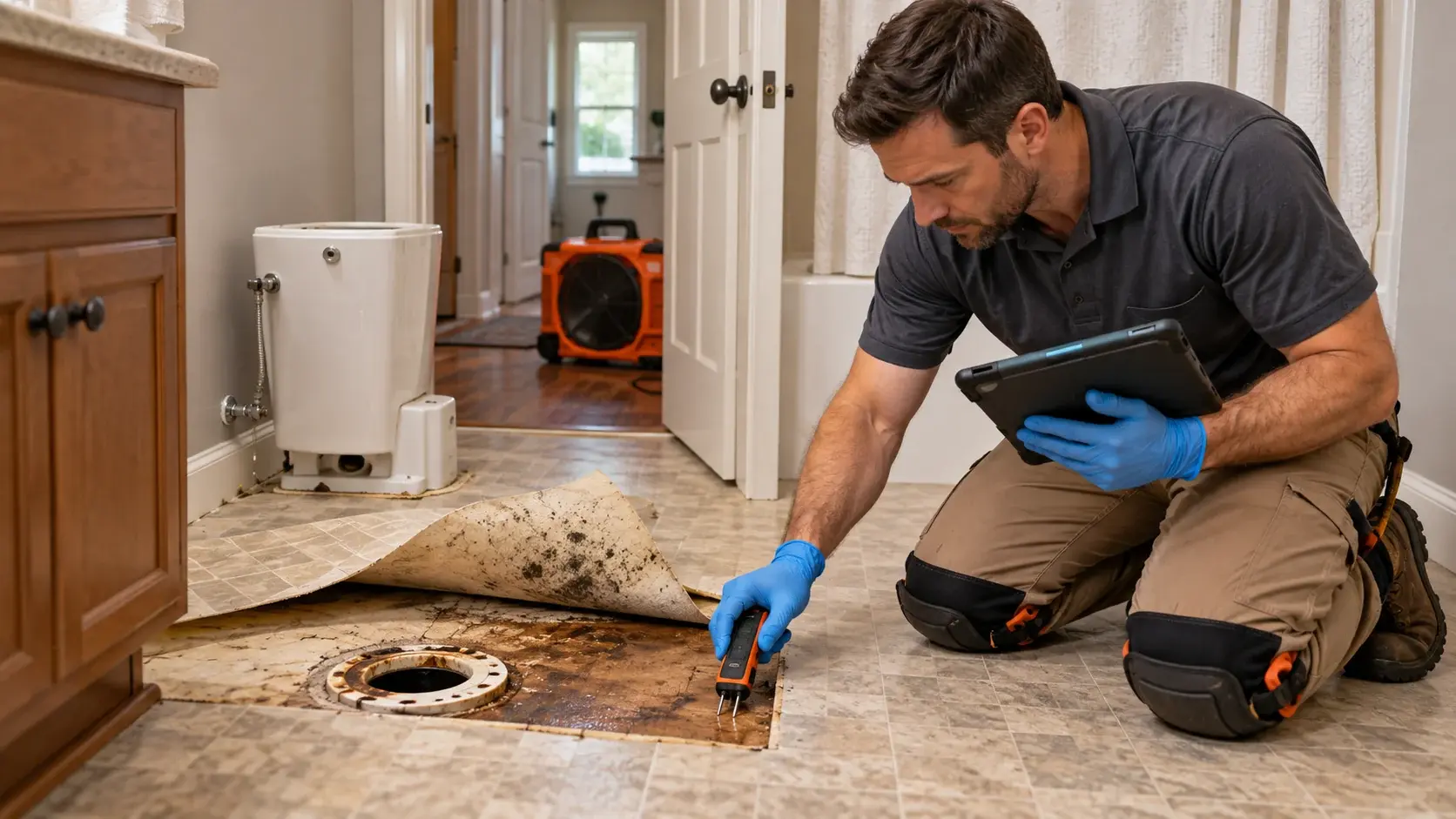
Bathroom Mold Remediation in Mount Sterling, KY: What Wet Flooring Can Hide

Updated: 6 days ago
Bathroom leaks are easy to underestimate because the visible water may disappear while moisture remains beneath sheet vinyl, laminate, underlayment, cabinets, baseboards, or the toilet flange. When those layers stay damp, they can support odor, material deterioration, and mold growth that is not visible from the room.

For homeowners and property managers searching for bathroom mold remediation in Mount Sterling, KY, the right response begins with identifying the water source and determining which material layers are actually wet. Cleaning a surface stain or running a fan across the finished floor does not confirm that the underlayment and subfloor have dried.
Why Bathroom Water Damage Often Stays Hidden
Bathrooms contain several common leak points within a small area. A failed toilet wax ring or flange, loose supply connection, leaking drain, tub or shower overflow, damaged caulk joint, or plumbing failure inside a wall can allow water to travel beneath the finish floor. Water may also follow pipe penetrations into the crawlspace or ceiling below.
Layered flooring makes evaluation more complicated. Sheet vinyl can slow evaporation from above, while thin wood underlayment or engineered subflooring can absorb and hold moisture. The top surface may feel dry even though lower layers remain damp. That is why a professional inspection uses moisture readings, visual observations, and access to adjacent or lower areas when available.
Warning Signs That Moisture May Be Trapped Below the Floor
Soft, swollen, stained, or uneven flooring near the toilet, tub, vanity, or doorway
Sheet vinyl that bubbles, curls, releases at seams, or develops dark discoloration
Loose toilet movement, recurring moisture around the base, or damage near the flange
Baseboards or door trim that swell, separate, or show staining
A persistent musty odor even after the visible water has been cleaned
Elevated moisture readings in the hallway, laundry area, or adjoining room
Wet insulation, staining, or suspected growth in the crawlspace beneath the bathroom
These signs do not prove the type or extent of mold by themselves. They indicate that the moisture pathway and affected assemblies should be evaluated before cosmetic repairs hide the evidence.
The First Steps After Discovering a Bathroom Leak
Stop the source if it can be done safely. Shut off the toilet or fixture supply when appropriate and arrange plumbing repair.
Avoid using the affected fixture until the leak source has been identified and corrected.
Photograph visible water, staining, damaged flooring, and the suspected source before moving or removing materials.
Do not direct household fans across visible mold-like growth or begin aggressive demolition without a containment plan.
Check adjoining rooms and the crawlspace, basement, or ceiling below for a wider moisture path.
Notify the insurer promptly when a claim may be involved and follow reasonable steps to prevent additional damage.
Phoenix provides water-damage mitigation and mold inspection services for Mount Sterling and Montgomery County properties. Inspection findings determine whether the project needs drying only, controlled material removal, mold remediation, plumbing repair coordination, or a combination of services.
How Professionals Evaluate Wet Bathroom Flooring
A useful assessment maps moisture instead of assuming that damage stops at the visible edge. The technician may compare affected readings with known dry materials, inspect accessible wall and cabinet areas, and evaluate the floor from below when a crawlspace or basement provides access.
Source and duration of the water loss
Water path beneath the finish flooring and through room transitions
Condition of sheet vinyl, laminate, tile assemblies, underlayment, and subfloor
Moisture at the toilet flange, vanity, supply lines, drain penetrations, and baseboards
Conditions in the crawlspace or ceiling below
Visible mold-like growth, odors, and materials that cannot be adequately cleaned or dried
Whether sampling would answer a specific question or change the remediation plan
Mold testing is not automatically required whenever visible growth is present. It can be useful when the source or extent is unclear, documentation is requested, an independent protocol is needed, or post-remediation verification is being considered. The decision should fit the property and the purpose of the investigation.
What Bathroom Mold Remediation May Include
The scope depends on the affected materials, the size of the work area, accessibility, and what is found after damaged finishes are removed. A professional remediation plan may include:
Establishing containment or work-area isolation appropriate to the project
Protecting adjacent rooms and controlling the movement of dust and debris
Removing unsalvageable porous flooring, underlayment, drywall, insulation, or trim using controlled methods
Bagging or wrapping debris before carrying it through clean areas
HEPA vacuuming and detailed physical cleaning of salvageable structural surfaces
Using products only for surfaces and purposes allowed by their labels
Drying the remaining assembly and monitoring moisture before rebuilding
Completing a visual and moisture review after cleaning
The U.S. Environmental Protection Agency explains that mold control depends on moisture control and that porous items that cannot be adequately cleaned may need to be discarded. Review the EPA's home mold and moisture guide for additional background.
Why Spraying or Covering the Area Is Not Enough
An antimicrobial application, coating, or new floor covering does not replace source correction, removal of unsalvageable material, physical cleaning, and drying. Applying a product over wet or contaminated material can conceal the condition while moisture remains trapped below.
Likewise, color alone does not identify a mold species or determine the scope. The practical questions are where the moisture came from, how far it traveled, which materials are affected, and whether the remaining assembly can be cleaned and dried.
Bathroom Leaks and Crawlspace Conditions
In homes with crawlspaces, water from a toilet, tub, or supply-line leak can travel through seams and penetrations into insulation or framing below. If the crawlspace lacks an effective vapor barrier or already has elevated humidity, the additional moisture can make drying more difficult.
The bathroom and crawlspace should be treated as connected assemblies when the water path crosses the subfloor. Removing wet insulation, cleaning affected framing, correcting ground moisture, improving drainage, or installing a vapor barrier may be recommended based on actual conditions—not as an automatic package for every leak.
Phoenix's article on basement and crawlspace mold warning signs in Mount Sterling explains how hidden moisture can persist below living areas.
Insurance Documentation After a Bathroom Water Loss
Some plumbing-related water losses may involve insurance, but coverage depends on the policy, the cause, the duration, exclusions, and reporting requirements. No restoration contractor can guarantee coverage. Helpful documentation may include:
Photos and video before material removal
The date the problem was discovered and a timeline of response actions
Moisture readings and a map of affected rooms or assemblies
The plumber's findings and invoice for correcting the source
The mitigation or remediation scope, equipment records, and monitoring notes
Photos of hidden conditions uncovered during controlled removal
Disposal records, change orders, and completion documentation
For another Mount Sterling example of layered flooring and claim documentation considerations, read Kitchen Sink Leak in Mount Sterling, KY: Water Damage Insurance and Cleanup Steps.
Preventing Another Bathroom Moisture Problem
Repair loose toilets, failed wax rings, cracked flanges, and leaking supply connections promptly
Replace damaged caulk or grout only after confirming the surrounding assembly is dry and sound
Use the bathroom exhaust fan during and after bathing and confirm it vents outdoors
Watch for movement at the toilet base, recurring staining, soft flooring, or unexplained odors
Inspect the crawlspace or ceiling below after a known overflow or plumbing failure
Avoid installing new finish flooring until the underlying material has been evaluated and dried
Schedule Bathroom Mold Remediation in Mount Sterling, KY
Phoenix Remediation & Restoration provides inspection-led professional mold remediation, water mitigation, controlled material removal, cleaning, drying, and documentation for homes and businesses in Mount Sterling and Montgomery County.
Call 859-585-3750 to discuss the next step, or schedule an inspection below. You can also view Phoenix Remediation & Restoration on Google Business Profile for company information and directions.
Frequently Asked Questions
Can mold grow beneath sheet vinyl without being visible?
Yes. Sheet vinyl and underlayment can conceal damp materials and slow evaporation. A dry-looking surface does not confirm that lower layers are dry.
Does a toilet leak always require mold remediation?
No. The response depends on how long materials remained wet, the water path, material condition, and whether mold growth or contamination is present. Prompt inspection and drying may limit the work required.
Can wet underlayment be dried in place?
Sometimes, but thin wood underlayment can swell, delaminate, or remain trapped beneath low-permeability flooring. Its condition and the ability to expose and dry the assembly determine whether removal is appropriate.
Should the toilet be reset before the floor is dry?
The leak source should be repaired and the affected floor assembly evaluated before permanent finishes and fixtures conceal it again. Plumbing and structural repairs should be completed by qualified professionals as appropriate.
Will insurance pay for bathroom mold remediation?
Coverage varies. The carrier determines whether the loss and resulting damage are covered under the policy. Prompt reporting, source-repair documentation, moisture records, and photographs can help support the review.
This article provides general restoration information and is not medical, plumbing, structural, legal, or insurance advice.


Comments